
Last newsletter (on the most useful skill to learn as a data professional) turned out to be one of my best performing posts. I really appreciate all the wonderful comments and messages I received, and I promise to continue writing more about it.
Which brings us to this issue. There are a handful of attitudes (or mindsets if you like) that enable you to start building this skill while still on the job.
Tinkering without permission is by far my favorite.
I’ve used this exact attitude to:
Learn for free while on the job
Cultivate more luck in my career
Look for opportunities to make an impact
I’ll show you exactly how to do all that in this newsletter.
What is “tinkering without permission?”
Tinkering is about being curious and trying things out. As you read books, articles, listen to podcasts, etc. certain ideas pique your interest and you’d want to explore them. The easiest way to explore is while on the job because you’ll be solving concrete problems not academic ones.
All you have to do is find a good reason to explore, ideally one that aligns with your company’s goals or can benefit them somehow. If you can do that, you’ve just given yourself license to pursue your curiosity.
Some of things you try won’t go anywhere, so it’s in your best interest to try things without asking for permission. It requires a little courage, but if you do it in your own time, or you can show how benefits the company, you’ll be fine.
Let me give you some examples.
Learn for free while on the job
I first encountered data science back in 2014. I was a newly minted “data analyst” trying to expand my expertise beyond data engineering and my company had just hired their first data scientist.
I got curious about what she did, so after talking with her for a while, I was peeved to learn I would need to take classes and get a degree in statistics if I wanted to call myself a “data scientist.” While I love learning, I had all but sworn off going back to school after my dismal experience with my MBA degree.
If I was going to learn data science quickly, I was going to do it on my own. I also realized that with the exception of a few select fields, companies don’t care much about your degrees, they care about what you can do for them.
So I found some books that taught the key concepts of data mining (what it was called back then) and statistics without getting too deep into the weeds. I also found YouTube tutorials that had applied examples.
I did all this in my own time. After learning enough theory, I looked for specific projects at work where I could apply it. I landed on the idea of building a model to score leads based on their propensity to convert.
The effort of data preparation, exploratory analysis, modeling and then explaining my work to my manager taught me far more about data science than any graduate program ever could.
Cultivate more luck in your career
In the summer of 2019 I entered the annual 2.5 day TripAdvisor hackathon with a project that had been brewing in the back of my mind for months. It was an application of NLP to extract tags from text descriptions. Amazon uses text tags to categorize and filter their vast number of reviews.
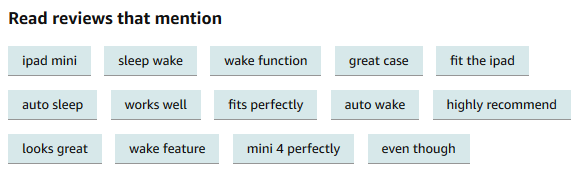
Hackathons are very short, intense, single or multi-day projects where people from various backgrounds collaborate to create new products or try out new things. They’re used in tech companies as a source of new ideas for innovation but they also happen to be excellent sources of serendipity.
That is exactly what happened to me after I presented my project in front of the three judges in the first round. Unexpectedly I made it to the second round, where I presented in front of a much bigger group of colleagues and judges. It turned out that the company was already considering a similar project.
I kept following this thread into other meetings, chats with the data science team (I wasn’t a data scientist) on how to approach it, and even a collaboration with a group of MIT MBAn students as a consultant on their project.
The whole thing was surreal as I never expected or planned for any of it to happen. Serendipity however is not that uncommon. It also led to my next role as a data product manager at a startup a few months later.
Look for opportunities to make an impact
One of the best things I’ve learned is to share your ideas with others even if they’re not fully fleshed out. Tell colleagues you meet randomly what you’re working on. Ask questions in meetings. Use sprint demos to showcase your projects.
You never know what might turn out
Richard Hamming, the Alan Turing award winning mathematician called it the “open door” phenomenon:
…working with one’s door closed lets you get more work done per year than if you had an open door, but I have observed repeatedly later those with the closed doors, while working just as hard as others, seem to work on slightly the wrong problems, while those who have let their door stay open get less work done but tend to work on the right problems! I cannot prove the cause and effect relationship, I only observed the correlation
Richard Hamming - You and Your Research
Having an open door leads to casual collisions, where people are free to stop by, ask you what you’re working on or ask for help on a project. These can dramatically alter the course of your career in beneficial ways. In my case my casual collision was the presentation I did in front of the judges and my peers.
The number of comments I got from that led me in a number of seemingly random but interesting paths which culminated with my involvement with the MIT students’ project.
These days I do a lot of virtual meetings. When I meet someone interesting, I schedule regular monthly meetings with them. I’ve met some of my best friends through this. We always talk about what we’re working on and share ideas.
Many of these ideas can be subtle pings that you have to recognize and follow up on that could turn into opportunities. Not all of them will pay off, but the ones who do could make up for it.
“The great scientists, when an opportunity opens up, get after it and they pursue it. They drop all other things. They get rid of other things and they get after an idea because they had already thought the thing through. Their minds are prepared; they see the opportunity and they go after it.”
Richard Hamming - You and Your Research
When you think of seemingly random occurrences as subtle pings it helps you to recognize their potential as an opportunity to pursue further, but noticing them in the first place requires, as Hamming puts it, an open mind. In fact, psychological research on luck puts a premium on openness.
Richard Wiseman in his book The Luck Factor found that people who consider themselves “lucky” tend to score high on extroversion (an orientation of one’s interests and energies toward the outer world of people and things rather than the inner world of subjective experience) and openness (to new experiences) and low on neuroticism (the tendency to experience negative emotions like anxiety, anger, guilt and depression).
That’s it for this issue. If you enjoyed it, let me know by liking, commenting and sharing it with your friends and colleagues.
Until next time.
Brilliant. This really builds on your previus post about the most useful skill for data pros. How do you manage the time commitment for this?
Love this idea.