
Should you still learn SQL (in the age of LLMs)?
On the importance (or not) of technical skills in the age of AI
This post is quick, but if you still want the TL;DR the answer is YES! You should still learn SQL, but not for the reasons you think. To learn why, read the rest of the post.
I have built my entire (circa 2 decade) career in data on SQL. Many others even longer. This is not some exaggeration on my part. I only started learning Python for software engineering in the last 2 - 3 years, as surprising as that may sound.
You probably know me as the guy who loves SQL. I even wrote a book on it. I’ve gone viral several times SQL-maxxing, so have I changed my tune?
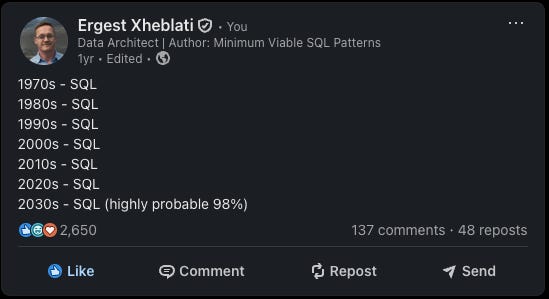
What’s happening with SQL
Let’s go through this logically and systematically so you fully understand the points I’m trying to make.
SQL is the best interface we have to query databases. It’s the lingua franca of any modern database. Many vendors who have tried to develop alternatives eventually give up and build a SQL engine.
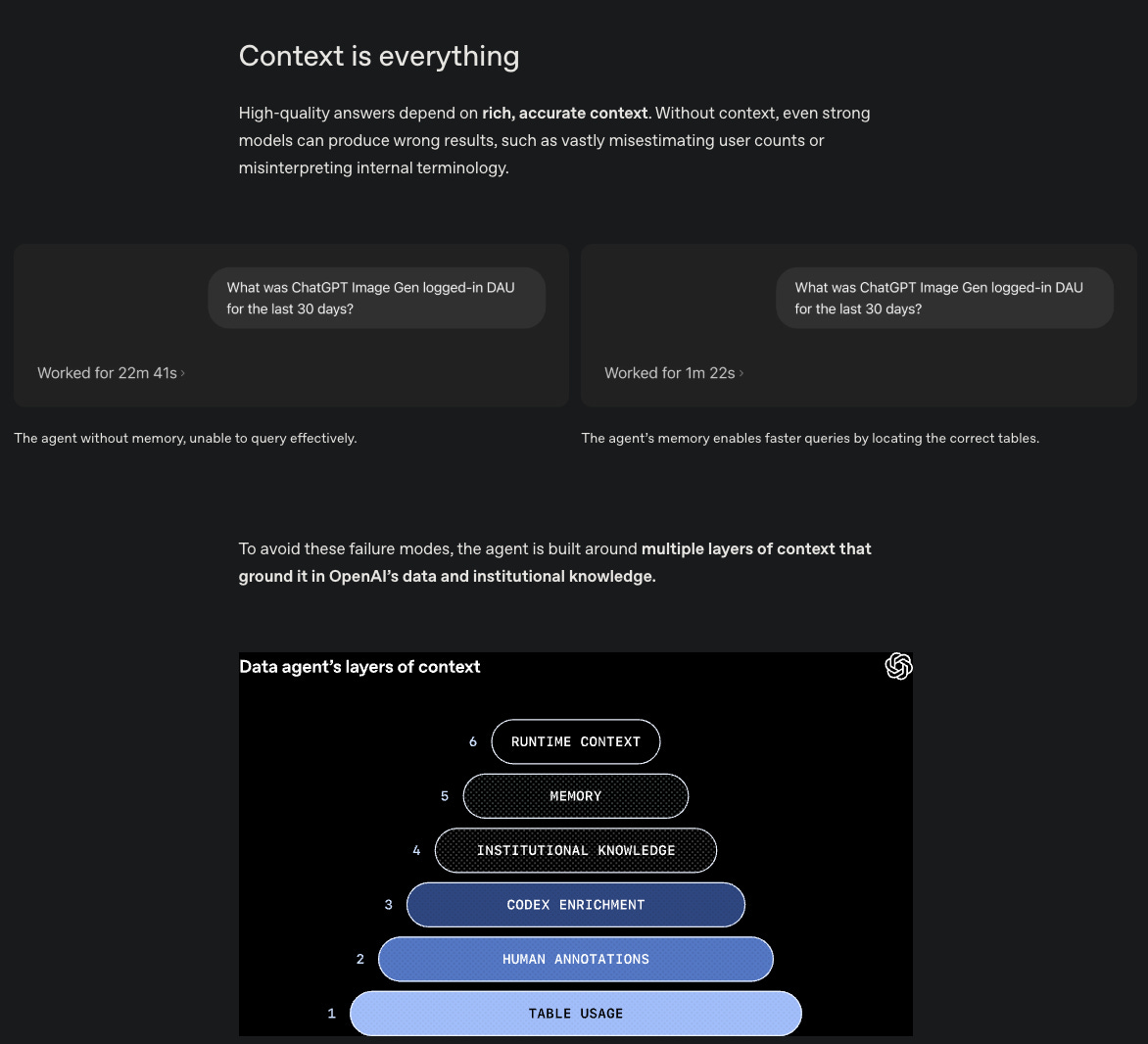
But something very important happened in the last few months. The latest LLM model offerings from the big AI labs (Opus / Sonnet 4.6, GPT 5.2) have gotten very good at writing correct SQL (given the right context as we’ll soon discuss)
This both SQL used to query existing data and SQL used to transform and model new data to prepare it for querying. I have seen this myself in my own daily work, but if you want to read more about it check out this awesome article Jacob Matson wrote.
The shift we’re seeing is that the interface to the data is getting compacted.
Until now, a stakeholder question (in English or any other human language) had to go through you (the data professional who understood both the business context and the data model) before it got translated to SQL, executed on the database, results extracted, polished and then served; the LLM now steps in and handles all that (provided it has the proper context as we’ll see shortly).
You should NOT be discouraged about this.
Yes, a large part of your role was to answer questions like this, but if I know anything about data professionals, one of the most despised elements of the job was exactly that. Instead you should rejoice! The most annoying part of your job is about to be automated!
Why you should still learn SQL
If you read Jacob’s article (and you totally should) you saw that the latest models produced nearly 95% accurate SQL. Given the right context, the latest versions of LLM models can almost entirely replace your “natural-language-to-SQL” translation duties.
So does this mean you should no longer learn SQL? Nope! You totally should, and here’s why:
First of all, while the models can generate very accurate SQL, they still need validation. Known as “model evals” this is how you ensure that LLMs produce accurate SQL. After all, you wouldn’t trust the work of a junior analyst on your team without checking their query, would you?
Second, learning SQL, especially as it relates to your company’s business domain, will teach you far more about the business than you can learn through other means. Repeatedly answering questions using SQL will show you exactly how the data represents the business.
Third, in order for the models to produce such high accuracy SQL they need clean, well-modeled data, but this data isn’t going to clean itself. That’s where you come in. In order for you to know what to model, how to model, what to clean, etc. you need to inspect the data by writing (you guessed it) SQL.
And as the data changes, expands and schemas evolve, someone needs to make sure the agents still produce accurate SQL. This will become a key aspect of the future of data engineering.
While your role as the “human interface to the database” will start to diminish, your role as the data context engineer will start to become even more important. In fact you should want this to be the case and you should start tinkering with it RIGHT NOW. The longer you wait, the more you will be left behind. See my previous post on this.
Also, I don’t know about you, but I’d much rather spend my time cleaning, transforming and modeling data. That’s what brings me joy. I have zero patience to be the “human interface to the database.”
If you don’t believe me, go read this article from OpenAI on how they built their in-house analytics agent and pay attention to this section:
Fin.
That’s it for this issue. If you enjoyed it, hit the like button, leave a comment or hit reply to this email, I read and respond to every one.
Until next time.
The important work starts six months before the query in getting data instrumented. I wonder if the AI enabled business leaders will have the foresight to ask in advance. When I have seen it work business, analytics and data build a close relationship that starts with the first "go for" request to the Analyst.
Very good article Ergest! Totally aligned with the best opinions I have read, "adapt or die", but at this pace of change, I won't be surprised if the big AIs will come out with something more efficient than SQL in the future, as with the rest of programming languages.